Buy semino.eu ?
We are moving the project
semino.eu .
Are you interested in purchasing the domain
semino.eu ?
domain@kv-gmbh.de · 0541-91531010
Buy semino.eu ?
What is a capacitor discharge?
A capacitor discharge is the process of releasing the stored electrical energy in a capacitor. When a charged capacitor is connected to a circuit, the stored energy is discharged through the circuit, creating a flow of current. This discharge can be sudden and powerful, and is often used in various electronic devices and systems to provide a burst of energy for a specific purpose, such as in camera flashes or in power supply systems. The rate of discharge and the amount of energy released depend on the capacitance and voltage of the capacitor. **
How do you discharge a capacitor quickly?
To discharge a capacitor quickly, you can use a resistor or a short circuit. By connecting a resistor across the terminals of the capacitor, the stored energy will be dissipated gradually. On the other hand, a short circuit will provide a path for the charge to flow quickly, resulting in a rapid discharge of the capacitor. It is important to handle capacitors with care and ensure they are fully discharged before working on them to avoid any potential hazards. **


Similar search terms for Uplift-Essentials-Capacitor-Discharge
Top-Angebote
Products related to Uplift-Essentials-Capacitor-Discharge:
-
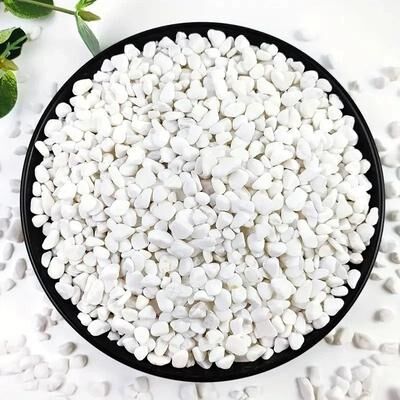
Uplift Essentials Polished Crystal Landscaping Pebbles 1 Lb Natural Mineral Gravel For Aquariums, Planters, & DIY Home Decor Polished Crystal Landscaping Pebbles 1 Lb Natural Mineral Gravel For Aquariums, Planters, & DIY Home Decor"Synchronize your sanctuary with the highdefinition, organic energy of our Polished Crystal Landscaping Pebbles. Featuring a highdensity 1 lb (450g) collection of natural mineral stones, this bulk set is designed to bring a ""geologicalluxe"" energy to..."69,97 $*Shipping: 0,00 $Secure redirect to the provider
-
Modern Harvest Tools & Trends 1999 Count Professional Multimeter, AC DC Voltage Tester, Ammeter, Capacitor & Electrician Detector Tool redLevel up your electrical diagnostics with this 1999 Count Professional Multimeter, engineered for precision and reliability. Whether you're a certified electrician or a handson DIY enthusiast, this ACDC Voltage Tester delivers the versatility you...21,97 $*Shipping: 0,00 $Secure redirect to the provider
-
Inspired Deals Auto Ranging ESR Meter And In Circuit Capacitor Tester 0.001100 Ohm Auto Ranging ESR Meter And In Circuit Capacitor Tester 0.001100 OhmFind failing capacitors faster and troubleshoot electronics with greater confidence using the ESR meter designed for practical bench and repair work. The MESR100 is an autoranging capacitor tester that measures ESR and low resistance from 0.001 to...139,97 $*Shipping: 0,00 $Secure redirect to the provider
-
Uplift Essentials Capacitor Discharge Pen For Safe High Voltage Capacitor Discharging 5000ufProtect yourself and your electronics during repairs with this fast and efficient capacitor discharge pen. Designed for safely releasing the stored energy in highvoltage capacitors, it prevents accidental electric shock and protects sensitive...59,97 $*Shipping: 0,00 $Secure redirect to the provider


-
What is the discharge of a capacitor?
The discharge of a capacitor refers to the process of releasing the stored electrical energy within the capacitor. When a charged capacitor is connected to a circuit, the stored energy is released as the capacitor discharges, causing a flow of current through the circuit. This discharge process continues until the capacitor has released all of its stored energy and its voltage drops to zero. The rate of discharge is determined by the capacitance of the capacitor and the resistance of the circuit it is connected to. **
-
How do you discharge a capacitor suddenly?
To discharge a capacitor suddenly, you can simply connect a resistor across its terminals. This will create a path for the stored energy to dissipate quickly. Alternatively, you can also short-circuit the capacitor by directly connecting a wire between its terminals. This will allow the capacitor to discharge rapidly. It is important to exercise caution when discharging a capacitor suddenly to avoid any potential hazards. **
-
What is the discharge rate of a capacitor?
The discharge rate of a capacitor refers to the rate at which the stored energy in the capacitor is released. It is the rate at which the capacitor discharges its stored electrical energy, typically measured in units of time, such as seconds. The discharge rate is determined by the capacitance of the capacitor and the resistance of the circuit through which it is discharging. A higher resistance will result in a slower discharge rate, while a lower resistance will result in a faster discharge rate. **
-
Why is the discharge current in a capacitor opposite?
The discharge current in a capacitor is opposite because when a capacitor discharges, the stored energy in the electric field is released. This causes the current to flow in the opposite direction to the charging current. As the capacitor discharges, the electric field collapses, causing the current to flow in the opposite direction as the charge is released. This phenomenon is a result of the conservation of energy and the behavior of the electric field in the capacitor. **


How do you discharge a capacitor through a resistor?
To discharge a capacitor through a resistor, you would first ensure that the capacitor is disconnected from any power source. Then, you would connect one end of the resistor to one terminal of the capacitor, and the other end of the resistor to the other terminal of the capacitor. This creates a path for the stored energy in the capacitor to flow through the resistor, gradually discharging the capacitor. The time it takes for the capacitor to fully discharge depends on the capacitance of the capacitor and the resistance of the resistor. **
How do you calculate the discharge of a capacitor?
The discharge of a capacitor can be calculated using the formula Q = CV, where Q is the charge stored on the capacitor, C is the capacitance of the capacitor, and V is the voltage across the capacitor. This formula shows that the charge stored on the capacitor is directly proportional to the capacitance and the voltage. By rearranging the formula, we can also calculate the voltage or capacitance if the charge and the other variable are known. Additionally, the discharge of a capacitor can be calculated using the formula I = C(dV/dt), where I is the current flowing through the capacitor, C is the capacitance, and dV/dt is the rate of change of voltage with respect to time. **
Top-Angebote
Products related to Uplift-Essentials-Capacitor-Discharge:
-
Uplift Essentials Capacitor Discharge Pen For Safe High Voltage Capacitor Discharging 1000ufProtect yourself and your electronics during repairs with this fast and efficient capacitor discharge pen. Designed for safely releasing the stored energy in highvoltage capacitors, it prevents accidental electric shock and protects sensitive...55,97 $*Shipping: 0,00 $Secure redirect to the provider
-
Perfect Picks Market Safety Capacitor Anti Flicker Capacitor For Smart Touch Switches 3.3uf 10pcsEnjoy steadier lighting and smoother smart switch performance without distracting flashes or unwanted glowing. This 3.3UF 275VAC capacitor is designed to help stabilize noneutral smart touch switch installations and reduce residualcurrentrelated...39,97 $*Shipping: 0,00 $Secure redirect to the provider
-
Uplift Essentials Polished Crystal Landscaping Pebbles 1 Lb Natural Mineral Gravel For Aquariums, Planters, & DIY Home Decor Polished Crystal Landscaping Pebbles 1 Lb Natural Mineral Gravel For Aquariums, Planters, & DIY Home Decor"Synchronize your sanctuary with the highdefinition, organic energy of our Polished Crystal Landscaping Pebbles. Featuring a highdensity 1 lb (450g) collection of natural mineral stones, this bulk set is designed to bring a ""geologicalluxe"" energy to..."69,97 $*Shipping: 0,00 $Secure redirect to the provider
-
Modern Harvest Tools & Trends 1999 Count Professional Multimeter, AC DC Voltage Tester, Ammeter, Capacitor & Electrician Detector Tool redLevel up your electrical diagnostics with this 1999 Count Professional Multimeter, engineered for precision and reliability. Whether you're a certified electrician or a handson DIY enthusiast, this ACDC Voltage Tester delivers the versatility you...21,97 $*Shipping: 0,00 $Secure redirect to the provider
-
What is a capacitor discharge?
A capacitor discharge is the process of releasing the stored electrical energy in a capacitor. When a charged capacitor is connected to a circuit, the stored energy is discharged through the circuit, creating a flow of current. This discharge can be sudden and powerful, and is often used in various electronic devices and systems to provide a burst of energy for a specific purpose, such as in camera flashes or in power supply systems. The rate of discharge and the amount of energy released depend on the capacitance and voltage of the capacitor. **
-
How do you discharge a capacitor quickly?
To discharge a capacitor quickly, you can use a resistor or a short circuit. By connecting a resistor across the terminals of the capacitor, the stored energy will be dissipated gradually. On the other hand, a short circuit will provide a path for the charge to flow quickly, resulting in a rapid discharge of the capacitor. It is important to handle capacitors with care and ensure they are fully discharged before working on them to avoid any potential hazards. **
-
What is the discharge of a capacitor?
The discharge of a capacitor refers to the process of releasing the stored electrical energy within the capacitor. When a charged capacitor is connected to a circuit, the stored energy is released as the capacitor discharges, causing a flow of current through the circuit. This discharge process continues until the capacitor has released all of its stored energy and its voltage drops to zero. The rate of discharge is determined by the capacitance of the capacitor and the resistance of the circuit it is connected to. **
-
How do you discharge a capacitor suddenly?
To discharge a capacitor suddenly, you can simply connect a resistor across its terminals. This will create a path for the stored energy to dissipate quickly. Alternatively, you can also short-circuit the capacitor by directly connecting a wire between its terminals. This will allow the capacitor to discharge rapidly. It is important to exercise caution when discharging a capacitor suddenly to avoid any potential hazards. **
Similar search terms for Uplift-Essentials-Capacitor-Discharge
-
Inspired Deals Auto Ranging ESR Meter And In Circuit Capacitor Tester 0.001100 Ohm Auto Ranging ESR Meter And In Circuit Capacitor Tester 0.001100 OhmFind failing capacitors faster and troubleshoot electronics with greater confidence using the ESR meter designed for practical bench and repair work. The MESR100 is an autoranging capacitor tester that measures ESR and low resistance from 0.001 to...139,97 $*Shipping: 0,00 $Secure redirect to the provider
-
Uplift Essentials Capacitor Discharge Pen For Safe High Voltage Capacitor Discharging 5000ufProtect yourself and your electronics during repairs with this fast and efficient capacitor discharge pen. Designed for safely releasing the stored energy in highvoltage capacitors, it prevents accidental electric shock and protects sensitive...59,97 $*Shipping: 0,00 $Secure redirect to the provider
-
Perfect Picks Market Safety Capacitor Anti Flicker Capacitor For Smart Touch Switches 3.3uf 2pcsEnjoy steadier lighting and smoother smart switch performance without distracting flashes or unwanted glowing. This 3.3UF 275VAC capacitor is designed to help stabilize noneutral smart touch switch installations and reduce residualcurrentrelated...29,97 $*Shipping: 0,00 $Secure redirect to the provider
-
Modern Harvest Tools & Trends 1999 Count Professional Multimeter, AC DC Voltage Tester, Ammeter, Capacitor & Electrician Detector Tool blackLevel up your electrical diagnostics with this 1999 Count Professional Multimeter, engineered for precision and reliability. Whether you're a certified electrician or a handson DIY enthusiast, this ACDC Voltage Tester delivers the versatility you...21,97 $*Shipping: 0,00 $Secure redirect to the provider
-
What is the discharge rate of a capacitor?
The discharge rate of a capacitor refers to the rate at which the stored energy in the capacitor is released. It is the rate at which the capacitor discharges its stored electrical energy, typically measured in units of time, such as seconds. The discharge rate is determined by the capacitance of the capacitor and the resistance of the circuit through which it is discharging. A higher resistance will result in a slower discharge rate, while a lower resistance will result in a faster discharge rate. **
-
Why is the discharge current in a capacitor opposite?
The discharge current in a capacitor is opposite because when a capacitor discharges, the stored energy in the electric field is released. This causes the current to flow in the opposite direction to the charging current. As the capacitor discharges, the electric field collapses, causing the current to flow in the opposite direction as the charge is released. This phenomenon is a result of the conservation of energy and the behavior of the electric field in the capacitor. **
-
How do you discharge a capacitor through a resistor?
To discharge a capacitor through a resistor, you would first ensure that the capacitor is disconnected from any power source. Then, you would connect one end of the resistor to one terminal of the capacitor, and the other end of the resistor to the other terminal of the capacitor. This creates a path for the stored energy in the capacitor to flow through the resistor, gradually discharging the capacitor. The time it takes for the capacitor to fully discharge depends on the capacitance of the capacitor and the resistance of the resistor. **
-
How do you calculate the discharge of a capacitor?
The discharge of a capacitor can be calculated using the formula Q = CV, where Q is the charge stored on the capacitor, C is the capacitance of the capacitor, and V is the voltage across the capacitor. This formula shows that the charge stored on the capacitor is directly proportional to the capacitance and the voltage. By rearranging the formula, we can also calculate the voltage or capacitance if the charge and the other variable are known. Additionally, the discharge of a capacitor can be calculated using the formula I = C(dV/dt), where I is the current flowing through the capacitor, C is the capacitance, and dV/dt is the rate of change of voltage with respect to time. **
* All prices are inclusive of VAT and, if applicable, plus shipping costs. The offer information is based on the details provided by the respective shop and is updated through automated processes. Real-time updates do not occur, so deviations can occur in individual cases. ** Note: Parts of this content were created by AI.