Buy semino.eu ?
We are moving the project
semino.eu .
Are you interested in purchasing the domain
semino.eu ?
domain@kv-gmbh.de · 0541-91531010
Buy semino.eu ?
What do you do during a student internship in landscaping and gardening (gardening and landscaping/gardening)?
During a student internship in landscaping and gardening, you would typically assist with various tasks such as planting, weeding, watering, and pruning plants. You may also help with landscape design, installation of hardscape features, and maintenance of outdoor spaces. Additionally, you may have the opportunity to learn about soil preparation, pest control, and proper use of gardening tools and equipment. Overall, the internship provides hands-on experience in all aspects of landscaping and gardening, allowing you to gain valuable skills and knowledge in the field. **
Are paramecia animal or plant single-celled organisms?
Paramecia are single-celled organisms that belong to the kingdom Protista. They are considered to be animal-like protists because they are heterotrophic, meaning they obtain their nutrients by ingesting other organisms. Paramecia are not considered to be plants because they do not perform photosynthesis and do not have cell walls made of cellulose. Instead, they have cilia for movement and feed on bacteria and other small organisms. **
Similar search terms for Paramecia
Top-Angebote
Products related to Paramecia:
-
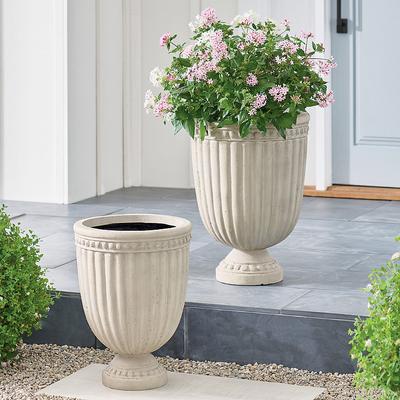
"Reese Pedestal Planters - 18"" - Grandin Road""Indoor/outdoor planter . Durable resin with carved stone look . Corrosion-, mold-, crack-resistant . Fits most Grandin Road urn fillers . Use with faux or live plants; 5/8"" drainage hole; optional rubber stopper included . Composite consists of..."175,20 $*Shipping: 29,95 $Secure redirect to the provider
-
"Kiran Pedestal Planters - 18"" - Grandin Road"Indoor/outdoor planter . Durable, lightweight cast fiberstone . Weathered stone finish . Corrosion, mold, & crack-resistant . Sized to fit Grandin Road urn fillers . Inspired by twentieth century European urns . Original, fluted-style casting;...175,20 $*Shipping: 29,95 $Secure redirect to the provider
-
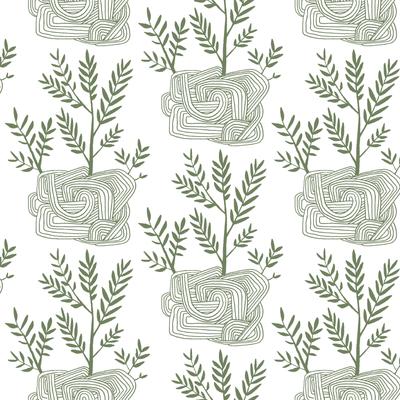
York Wallcoverings Grey Seedlings Peel and Stick WallpaperPattern Seedlings is an earthy leaf and sprig depiction of the promise of coming springs. This Seedlings Peel & Stick Wallpaper measures approximately 20.5 inches wide by 20 feet long, covering About 34.2 square feet per roll.51,49 $*Shipping: 0,00 $Secure redirect to the provider
-
York Wallcoverings Blue Seedlings Peel and Stick WallpaperPattern Seedlings is an earthy leaf and sprig depiction of the promise of coming springs. This Seedlings Peel & Stick Wallpaper measures approximately 20.5 inches wide by 20 feet long, covering About 34.2 square feet per roll.51,49 $*Shipping: 0,00 $Secure redirect to the provider


-
How does nutrition and digestion occur in paramecia?
Paramecia obtain nutrition through phagocytosis, where they engulf food particles such as bacteria or algae using their cilia. Once the food particles are inside the paramecium, they are enclosed in a food vacuole. Digestive enzymes are then secreted into the food vacuole to break down the food particles into smaller molecules. These nutrients are then absorbed by the paramecium for energy and growth. Any undigested material is expelled from the cell through a process called exocytosis. **
-
What does the competition look like for paramecia?
The competition for paramecia is primarily with other microorganisms in their environment, such as bacteria and other protozoa. They compete for resources such as food and living space. Paramecia use their cilia to move and feed on bacteria and other small organisms, and they also reproduce rapidly, allowing them to outcompete other microorganisms for resources. Additionally, paramecia may also face competition from predators such as other protozoa, small crustaceans, and even some types of algae. **
-
How does the nutrition and digestion occur in paramecia?
Paramecia obtain nutrition through phagocytosis, where they engulf food particles such as bacteria, algae, and other organic matter. Once inside the cell, the food vacuole containing the engulfed particles fuses with lysosomes, where digestion occurs. Enzymes within the lysosomes break down the food particles into smaller molecules, which are then absorbed and utilized by the paramecium for energy and growth. Waste products are expelled from the cell through a specialized structure called the anal pore. **
-
What can be observed with a microscope in paramecia?
With a microscope, one can observe the cilia that paramecia use for movement, as well as their characteristic slipper-like shape. Additionally, the nucleus, contractile vacuoles, and food vacuoles within the paramecia can be seen under a microscope. Observing paramecia under a microscope can also reveal their feeding behavior, as they engulf food particles through a process called phagocytosis. **

Why do some paramecia not have a pulsating vacuole?
Some paramecia do not have a pulsating vacuole because they may live in environments with stable water conditions, such as freshwater ponds or slow-moving streams, where they do not need to actively regulate their water balance. Additionally, some species of paramecia may have evolved alternative mechanisms for maintaining water balance, such as specialized contractile vacuoles or other cellular structures. The absence of a pulsating vacuole in certain paramecia may also be a result of genetic variation and adaptation to specific ecological niches. **
What is the ecology of paramecia and yeast cells?
Paramecia are single-celled organisms that are found in freshwater environments. They are heterotrophic, meaning they feed on bacteria and other small organisms. Paramecia play a role in the ecosystem by helping to control bacterial populations and serving as a food source for larger organisms. Yeast cells are also single-celled organisms that are found in various environments, including soil, plants, and the human body. They are important in the process of fermentation, which is used in the production of bread, beer, and wine. Yeast cells also play a role in the decomposition of organic matter and are a food source for other organisms in the ecosystem. **
Top-Angebote
Products related to Paramecia:
-
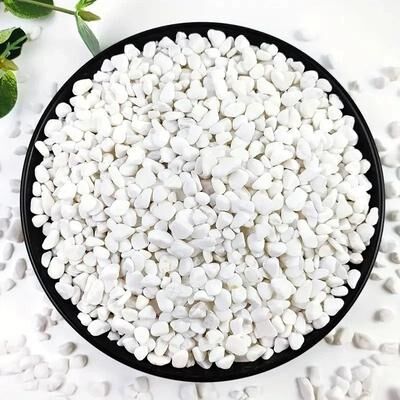
Uplift Essentials Polished Crystal Landscaping Pebbles 1 Lb Natural Mineral Gravel For Aquariums, Planters, & DIY Home Decor Polished Crystal Landscaping Pebbles 1 Lb Natural Mineral Gravel For Aquariums, Planters, & DIY Home Decor"Synchronize your sanctuary with the highdefinition, organic energy of our Polished Crystal Landscaping Pebbles. Featuring a highdensity 1 lb (450g) collection of natural mineral stones, this bulk set is designed to bring a ""geologicalluxe"" energy to..."69,97 $*Shipping: 0,00 $Secure redirect to the provider
-
York Wallcoverings Green Seedlings Peel and Stick WallpaperPattern Seedlings is an earthy leaf and sprig depiction of the promise of coming springs. This Seedlings Peel & Stick Wallpaper measures approximately 20.5 inches wide by 20 feet long, covering About 34.2 square feet per roll.44,40 $*Shipping: 0,00 $Secure redirect to the provider
-
"Reese Pedestal Planters - 18"" - Grandin Road""Indoor/outdoor planter . Durable resin with carved stone look . Corrosion-, mold-, crack-resistant . Fits most Grandin Road urn fillers . Use with faux or live plants; 5/8"" drainage hole; optional rubber stopper included . Composite consists of..."175,20 $*Shipping: 29,95 $Secure redirect to the provider
-
"Kiran Pedestal Planters - 18"" - Grandin Road"Indoor/outdoor planter . Durable, lightweight cast fiberstone . Weathered stone finish . Corrosion, mold, & crack-resistant . Sized to fit Grandin Road urn fillers . Inspired by twentieth century European urns . Original, fluted-style casting;...175,20 $*Shipping: 29,95 $Secure redirect to the provider
-
What do you do during a student internship in landscaping and gardening (gardening and landscaping/gardening)?
During a student internship in landscaping and gardening, you would typically assist with various tasks such as planting, weeding, watering, and pruning plants. You may also help with landscape design, installation of hardscape features, and maintenance of outdoor spaces. Additionally, you may have the opportunity to learn about soil preparation, pest control, and proper use of gardening tools and equipment. Overall, the internship provides hands-on experience in all aspects of landscaping and gardening, allowing you to gain valuable skills and knowledge in the field. **
-
Are paramecia animal or plant single-celled organisms?
Paramecia are single-celled organisms that belong to the kingdom Protista. They are considered to be animal-like protists because they are heterotrophic, meaning they obtain their nutrients by ingesting other organisms. Paramecia are not considered to be plants because they do not perform photosynthesis and do not have cell walls made of cellulose. Instead, they have cilia for movement and feed on bacteria and other small organisms. **
-
How does nutrition and digestion occur in paramecia?
Paramecia obtain nutrition through phagocytosis, where they engulf food particles such as bacteria or algae using their cilia. Once the food particles are inside the paramecium, they are enclosed in a food vacuole. Digestive enzymes are then secreted into the food vacuole to break down the food particles into smaller molecules. These nutrients are then absorbed by the paramecium for energy and growth. Any undigested material is expelled from the cell through a process called exocytosis. **
-
What does the competition look like for paramecia?
The competition for paramecia is primarily with other microorganisms in their environment, such as bacteria and other protozoa. They compete for resources such as food and living space. Paramecia use their cilia to move and feed on bacteria and other small organisms, and they also reproduce rapidly, allowing them to outcompete other microorganisms for resources. Additionally, paramecia may also face competition from predators such as other protozoa, small crustaceans, and even some types of algae. **
Similar search terms for Paramecia
-
York Wallcoverings Grey Seedlings Peel and Stick WallpaperPattern Seedlings is an earthy leaf and sprig depiction of the promise of coming springs. This Seedlings Peel & Stick Wallpaper measures approximately 20.5 inches wide by 20 feet long, covering About 34.2 square feet per roll.51,49 $*Shipping: 0,00 $Secure redirect to the provider
-
York Wallcoverings Blue Seedlings Peel and Stick WallpaperPattern Seedlings is an earthy leaf and sprig depiction of the promise of coming springs. This Seedlings Peel & Stick Wallpaper measures approximately 20.5 inches wide by 20 feet long, covering About 34.2 square feet per roll.51,49 $*Shipping: 0,00 $Secure redirect to the provider
-
"Reese Pedestal Planters - 21"" - Grandin Road""Indoor/outdoor planter . Durable resin with carved stone look . Corrosion-, mold-, crack-resistant . Fits most Grandin Road urn fillers . Use with faux or live plants; 5/8"" drainage hole; optional rubber stopper included . Composite consists of..."191,20 $*Shipping: 29,95 $Secure redirect to the provider
-
"Kiran Pedestal Planters - 24"" - Grandin Road"Indoor/outdoor planter . Durable, lightweight cast fiberstone . Weathered stone finish . Corrosion, mold, & crack-resistant . Sized to fit Grandin Road urn fillers . Inspired by twentieth century European urns . Original, fluted-style casting;...191,20 $*Shipping: 29,95 $Secure redirect to the provider
-
How does the nutrition and digestion occur in paramecia?
Paramecia obtain nutrition through phagocytosis, where they engulf food particles such as bacteria, algae, and other organic matter. Once inside the cell, the food vacuole containing the engulfed particles fuses with lysosomes, where digestion occurs. Enzymes within the lysosomes break down the food particles into smaller molecules, which are then absorbed and utilized by the paramecium for energy and growth. Waste products are expelled from the cell through a specialized structure called the anal pore. **
-
What can be observed with a microscope in paramecia?
With a microscope, one can observe the cilia that paramecia use for movement, as well as their characteristic slipper-like shape. Additionally, the nucleus, contractile vacuoles, and food vacuoles within the paramecia can be seen under a microscope. Observing paramecia under a microscope can also reveal their feeding behavior, as they engulf food particles through a process called phagocytosis. **
-
Why do some paramecia not have a pulsating vacuole?
Some paramecia do not have a pulsating vacuole because they may live in environments with stable water conditions, such as freshwater ponds or slow-moving streams, where they do not need to actively regulate their water balance. Additionally, some species of paramecia may have evolved alternative mechanisms for maintaining water balance, such as specialized contractile vacuoles or other cellular structures. The absence of a pulsating vacuole in certain paramecia may also be a result of genetic variation and adaptation to specific ecological niches. **
-
What is the ecology of paramecia and yeast cells?
Paramecia are single-celled organisms that are found in freshwater environments. They are heterotrophic, meaning they feed on bacteria and other small organisms. Paramecia play a role in the ecosystem by helping to control bacterial populations and serving as a food source for larger organisms. Yeast cells are also single-celled organisms that are found in various environments, including soil, plants, and the human body. They are important in the process of fermentation, which is used in the production of bread, beer, and wine. Yeast cells also play a role in the decomposition of organic matter and are a food source for other organisms in the ecosystem. **
* All prices are inclusive of VAT and, if applicable, plus shipping costs. The offer information is based on the details provided by the respective shop and is updated through automated processes. Real-time updates do not occur, so deviations can occur in individual cases. ** Note: Parts of this content were created by AI.