Buy semino.eu ?
We are moving the project
semino.eu .
Are you interested in purchasing the domain
semino.eu ?
domain@kv-gmbh.de · 0541-91531010
Buy semino.eu ?
How do you determine the thread pitch without a thread gauge?
To determine the thread pitch without a thread gauge, you can use a ruler to measure the distance between the peaks of the threads. Then, count the number of peaks within a one-inch span. Divide the number of peaks by the measurement in inches to determine the thread pitch. Another method is to use a pitch gauge, which is a tool with a series of blades that can be matched against the threads to determine the pitch. Additionally, you can compare the threads to a known thread pitch to visually estimate the pitch. **
How is a force gauge constructed?
A force gauge is typically constructed with a spring mechanism that deforms under the application of force. This deformation is then converted into a measurement of force using a calibrated scale or electronic sensor. The force gauge may also include a display to show the measured force, as well as a handle or attachment point for applying the force. Some force gauges also have the ability to record and store force measurements for later analysis. **

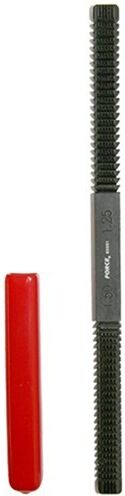
Similar search terms for FORCE-5096P6-Thread-Gauge
Top-Angebote
Products related to FORCE-5096P6-Thread-Gauge:
-
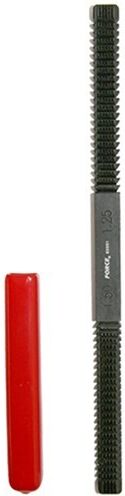
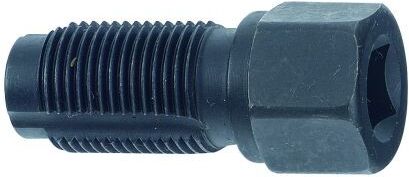
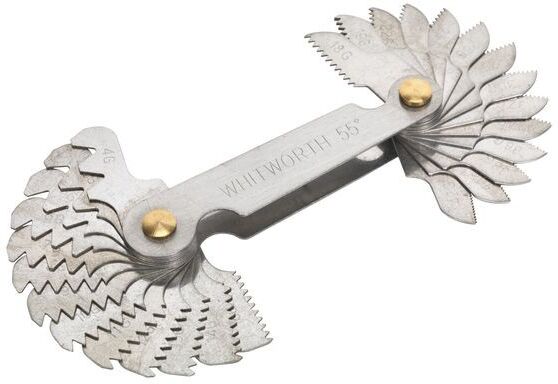
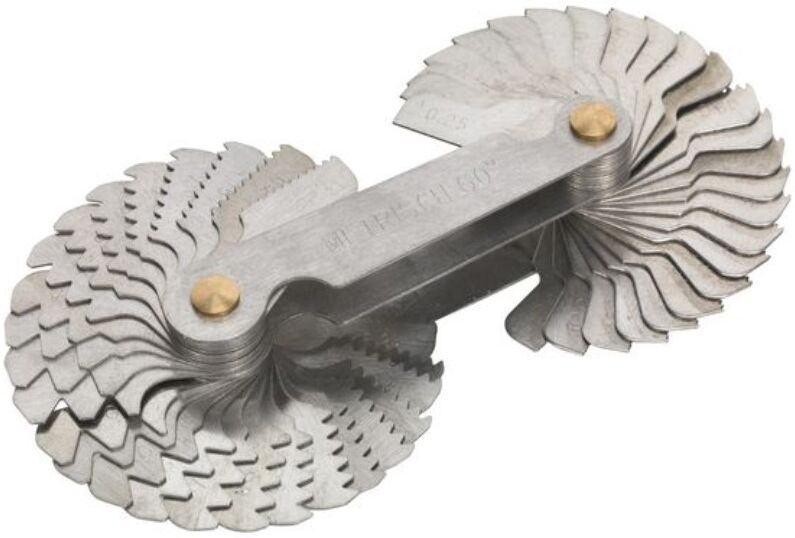
SEALEY AK71SPG Thread GaugeMeasuring Range from [mm]: 0.4; Measuring Range to[mm]: 6; Number of blades: 20; Thread Type: with metric thread; Thread Pitch [mm]: 0.4, 0.45, 0.5, 0.6, 0.7, 0.75, 0.8, 1, 1.25, 1.5, 1.75, 2, 2.5, 3, 3.5, 4, 4.5, 5, 5.5, 611,49 £*Shipping: 8,45 £Secure redirect to the provider

-
How do you calibrate a force gauge?
To calibrate a force gauge, you will need to use a known weight or force to verify the accuracy of the gauge. First, you should zero the force gauge to ensure it is reading accurately. Then, apply the known force to the force gauge and compare the reading to the expected value. If there is a discrepancy, you can adjust the calibration settings on the force gauge to bring it into alignment with the known force. It is important to follow the manufacturer's instructions for calibration and to regularly recalibrate the force gauge to ensure accurate measurements. **
-
How do you measure with the force gauge?
To measure with a force gauge, you first attach the force gauge to the object or material you want to measure. Then, you apply force to the object in the desired direction until the force gauge records the maximum force applied. The force gauge will display the force measurement in the specified unit, such as pounds or newtons. It is important to ensure that the force is applied evenly and steadily to obtain an accurate measurement. **
-
How can one build a force gauge themselves?
To build a force gauge, one can start by obtaining a spring with a known spring constant. Then, attach a hook or a platform to one end of the spring and a handle or a grip to the other end. Next, calibrate the force gauge by applying known forces and measuring the resulting spring displacement. Finally, mark the displacement readings on the force gauge to create a scale for measuring forces. This DIY force gauge can be used to measure forces by pulling or pushing on the handle or grip and observing the spring displacement. **
-
What are the zero adjustment and measuring range of a force gauge?
The zero adjustment of a force gauge refers to the ability to calibrate the gauge to read zero when no force is being applied. This ensures accurate measurements by accounting for any offset in the readings. The measuring range of a force gauge refers to the minimum and maximum values of force that the gauge can accurately measure. It is important to select a force gauge with a measuring range that is suitable for the intended application to ensure accurate and reliable results. **

What are the zero-shift and measuring range of a force gauge?
The zero-shift of a force gauge refers to the ability to reset the gauge to zero after it has been used, ensuring accurate measurements for subsequent tests. The measuring range of a force gauge refers to the range of force values that the gauge is capable of measuring accurately. For example, a force gauge may have a measuring range of 0-500N, meaning it can accurately measure forces ranging from 0 to 500 Newtons. Both the zero-shift and measuring range are important factors to consider when selecting a force gauge for a specific application. **
What is the question when I pull on a force gauge on both sides?
The question when you pull on a force gauge on both sides is "What is the tension or force being applied to the object being pulled?" When you use a force gauge on both sides, you are essentially measuring the force being exerted in opposite directions. This can help determine the overall tension or force being applied to the object, which is important for understanding the stress and strain on the object. **
Top-Angebote
Products related to FORCE-5096P6-Thread-Gauge:
-
How do you determine the thread pitch without a thread gauge?
To determine the thread pitch without a thread gauge, you can use a ruler to measure the distance between the peaks of the threads. Then, count the number of peaks within a one-inch span. Divide the number of peaks by the measurement in inches to determine the thread pitch. Another method is to use a pitch gauge, which is a tool with a series of blades that can be matched against the threads to determine the pitch. Additionally, you can compare the threads to a known thread pitch to visually estimate the pitch. **
-
How is a force gauge constructed?
A force gauge is typically constructed with a spring mechanism that deforms under the application of force. This deformation is then converted into a measurement of force using a calibrated scale or electronic sensor. The force gauge may also include a display to show the measured force, as well as a handle or attachment point for applying the force. Some force gauges also have the ability to record and store force measurements for later analysis. **
-
How do you calibrate a force gauge?
To calibrate a force gauge, you will need to use a known weight or force to verify the accuracy of the gauge. First, you should zero the force gauge to ensure it is reading accurately. Then, apply the known force to the force gauge and compare the reading to the expected value. If there is a discrepancy, you can adjust the calibration settings on the force gauge to bring it into alignment with the known force. It is important to follow the manufacturer's instructions for calibration and to regularly recalibrate the force gauge to ensure accurate measurements. **
-
How do you measure with the force gauge?
To measure with a force gauge, you first attach the force gauge to the object or material you want to measure. Then, you apply force to the object in the desired direction until the force gauge records the maximum force applied. The force gauge will display the force measurement in the specified unit, such as pounds or newtons. It is important to ensure that the force is applied evenly and steadily to obtain an accurate measurement. **
Similar search terms for FORCE-5096P6-Thread-Gauge
-
SEALEY AK71SPG Thread GaugeMeasuring Range from [mm]: 0.4; Measuring Range to[mm]: 6; Number of blades: 20; Thread Type: with metric thread; Thread Pitch [mm]: 0.4, 0.45, 0.5, 0.6, 0.7, 0.75, 0.8, 1, 1.25, 1.5, 1.75, 2, 2.5, 3, 3.5, 4, 4.5, 5, 5.5, 611,49 £*Shipping: 8,45 £Secure redirect to the provider
-
SEALEY AK73SPG Thread GaugeMeasuring Range from [mm]: 0.25; Measuring Range to[mm]: 6; Number of blades: 52; Thread Type: with metric thread; Thread Pitch [mm]: 0.25, 0.3, 0.35, 0.4, 0.45, 0.5, 0.6, 0.7, 0.75, 0.8, 1.0, 1.25, 1.5, 1.75, 2, 2.5, 3, 3.5, 4, 4.5, 5, 5.5, 618,49 £*Shipping: 8,45 £Secure redirect to the provider
-
FORCE 61802 Feeler GaugeNumber of blades: 26; Length [mm]: 95; Measuring Range from [mm]: 0.04; Measuring Range to[mm]: 0.63; Weight [g]: 120; Scale: Metric; Size: 0.04, 0.05, 0.06, 0.08, 0.10, 0.13, 0.15, 0.18, 0.20, 0.23, 0.25, 0.28, 0.30, 0.33, 0.35, 0.38, 0.40, 0.43, 0.45, 0.48, 0.50, 0.53, 0.55, 0.58, 0.60, 0.639,29 £*Shipping: 8,45 £Secure redirect to the provider
-
How can one build a force gauge themselves?
To build a force gauge, one can start by obtaining a spring with a known spring constant. Then, attach a hook or a platform to one end of the spring and a handle or a grip to the other end. Next, calibrate the force gauge by applying known forces and measuring the resulting spring displacement. Finally, mark the displacement readings on the force gauge to create a scale for measuring forces. This DIY force gauge can be used to measure forces by pulling or pushing on the handle or grip and observing the spring displacement. **
-
What are the zero adjustment and measuring range of a force gauge?
The zero adjustment of a force gauge refers to the ability to calibrate the gauge to read zero when no force is being applied. This ensures accurate measurements by accounting for any offset in the readings. The measuring range of a force gauge refers to the minimum and maximum values of force that the gauge can accurately measure. It is important to select a force gauge with a measuring range that is suitable for the intended application to ensure accurate and reliable results. **
-
What are the zero-shift and measuring range of a force gauge?
The zero-shift of a force gauge refers to the ability to reset the gauge to zero after it has been used, ensuring accurate measurements for subsequent tests. The measuring range of a force gauge refers to the range of force values that the gauge is capable of measuring accurately. For example, a force gauge may have a measuring range of 0-500N, meaning it can accurately measure forces ranging from 0 to 500 Newtons. Both the zero-shift and measuring range are important factors to consider when selecting a force gauge for a specific application. **
-
What is the question when I pull on a force gauge on both sides?
The question when you pull on a force gauge on both sides is "What is the tension or force being applied to the object being pulled?" When you use a force gauge on both sides, you are essentially measuring the force being exerted in opposite directions. This can help determine the overall tension or force being applied to the object, which is important for understanding the stress and strain on the object. **
* All prices are inclusive of VAT and, if applicable, plus shipping costs. The offer information is based on the details provided by the respective shop and is updated through automated processes. Real-time updates do not occur, so deviations can occur in individual cases. ** Note: Parts of this content were created by AI.