Buy semino.eu ?
We are moving the project
semino.eu .
Are you interested in purchasing the domain
semino.eu ?
domain@kv-gmbh.de · 0541-91531010
Buy semino.eu ?
What do you do during a student internship in landscaping and gardening (gardening and landscaping/gardening)?
During a student internship in landscaping and gardening, you would typically assist with various tasks such as planting, weeding, watering, and pruning plants. You may also help with landscape design, installation of hardscape features, and maintenance of outdoor spaces. Additionally, you may have the opportunity to learn about soil preparation, pest control, and proper use of gardening tools and equipment. Overall, the internship provides hands-on experience in all aspects of landscaping and gardening, allowing you to gain valuable skills and knowledge in the field. **
How to create a titration curve of a conductivity titration?
To create a titration curve of a conductivity titration, you would first need to set up your titration apparatus with a conductivity meter. Begin by measuring the initial conductivity of the solution being titrated. As you add titrant incrementally, record the conductivity at each point. Plot the conductivity values against the volume of titrant added to create a titration curve. The curve will typically show a sharp increase in conductivity at the equivalence point, allowing you to determine the endpoint of the titration. **

Similar search terms for Titration
Top-Angebote
Products related to Titration:
-
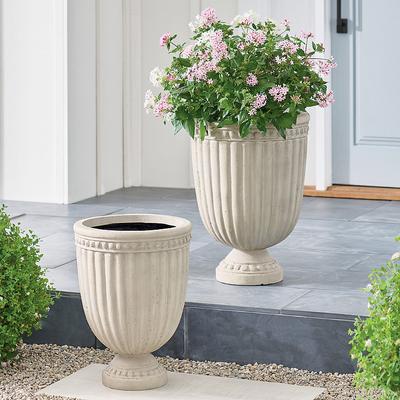
"Reese Pedestal Planters - 18"" - Grandin Road""Indoor/outdoor planter . Durable resin with carved stone look . Corrosion-, mold-, crack-resistant . Fits most Grandin Road urn fillers . Use with faux or live plants; 5/8"" drainage hole; optional rubber stopper included . Composite consists of..."175,20 $*Shipping: 29,95 $Secure redirect to the provider
-
"Kiran Pedestal Planters - 24"" - Grandin Road"Indoor/outdoor planter . Durable, lightweight cast fiberstone . Weathered stone finish . Corrosion, mold, & crack-resistant . Sized to fit Grandin Road urn fillers . Inspired by twentieth century European urns . Original, fluted-style casting;...191,20 $*Shipping: 29,95 $Secure redirect to the provider
-
York Wallcoverings Grey Seedlings Peel and Stick WallpaperPattern Seedlings is an earthy leaf and sprig depiction of the promise of coming springs. This Seedlings Peel & Stick Wallpaper measures approximately 20.5 inches wide by 20 feet long, covering About 34.2 square feet per roll.51,49 $*Shipping: 0,00 $Secure redirect to the provider
-
York Wallcoverings Blue Seedlings Peel and Stick WallpaperPattern Seedlings is an earthy leaf and sprig depiction of the promise of coming springs. This Seedlings Peel & Stick Wallpaper measures approximately 20.5 inches wide by 20 feet long, covering About 34.2 square feet per roll.51,49 $*Shipping: 0,00 $Secure redirect to the provider


-
How does a titration with the degree of titration work?
A titration with the degree of titration works by gradually adding a titrant of known concentration to a solution of the analyte until the reaction between the two is complete. The point at which the reaction is complete is determined by using an indicator or a pH meter. The amount of titrant required to reach this point is used to calculate the concentration of the analyte in the original solution. The degree of titration refers to the extent to which the reaction has progressed and is typically expressed as a percentage. **
-
How does titration work?
Titration is a technique used in chemistry to determine the concentration of a specific substance in a solution. It involves slowly adding a solution of known concentration (titrant) to a solution of unknown concentration until the reaction between the two is complete. This is typically indicated by a color change or other observable change. By measuring the volume of titrant required to reach the endpoint, the concentration of the unknown solution can be calculated using stoichiometry. **
-
What is a titration?
A titration is a laboratory technique used to determine the concentration of a specific substance in a solution. It involves slowly adding a solution of known concentration (titrant) to a solution of unknown concentration until the reaction between the two is complete. The point at which the reaction is complete is called the equivalence point, which is used to calculate the concentration of the unknown solution. Titration is commonly used in chemistry for various purposes, such as determining the acidity or alkalinity of a solution. **
-
Can the titration volume be calculated without having performed the titration beforehand?
No, the titration volume cannot be accurately calculated without having performed the titration beforehand. The titration volume is determined by the amount of titrant needed to reach the equivalence point, which can only be determined through the actual titration process. The titration volume is a crucial parameter in determining the concentration of the analyte in the sample, so it is essential to perform the titration to obtain this information accurately. **

What does a titration curve look like when no titration is performed?
When no titration is performed, a titration curve would simply be a straight horizontal line at the initial pH of the solution being tested. This is because there would be no addition of titrant to cause any changes in pH. The curve would remain flat and unchanging until a titrant is added to initiate the titration process. **
What is the difference between a pH-metric titration and an indicator titration?
A pH-metric titration involves the use of a pH meter to measure the pH of a solution as a titrant is added to it. This allows for a precise determination of the equivalence point of the titration. On the other hand, an indicator titration uses a chemical indicator that changes color at or near the equivalence point to signal the end of the titration. While pH-metric titrations provide more accurate and precise results, indicator titrations are simpler and more commonly used in introductory chemistry labs. **
Top-Angebote
Products related to Titration:
-
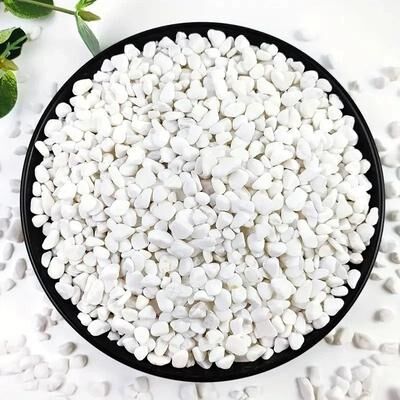
Uplift Essentials Polished Crystal Landscaping Pebbles 1 Lb Natural Mineral Gravel For Aquariums, Planters, & DIY Home Decor Polished Crystal Landscaping Pebbles 1 Lb Natural Mineral Gravel For Aquariums, Planters, & DIY Home Decor"Synchronize your sanctuary with the highdefinition, organic energy of our Polished Crystal Landscaping Pebbles. Featuring a highdensity 1 lb (450g) collection of natural mineral stones, this bulk set is designed to bring a ""geologicalluxe"" energy to..."69,97 $*Shipping: 0,00 $Secure redirect to the provider
-
York Wallcoverings Green Seedlings Peel and Stick WallpaperPattern Seedlings is an earthy leaf and sprig depiction of the promise of coming springs. This Seedlings Peel & Stick Wallpaper measures approximately 20.5 inches wide by 20 feet long, covering About 34.2 square feet per roll.44,40 $*Shipping: 0,00 $Secure redirect to the provider
-
"Reese Pedestal Planters - 18"" - Grandin Road""Indoor/outdoor planter . Durable resin with carved stone look . Corrosion-, mold-, crack-resistant . Fits most Grandin Road urn fillers . Use with faux or live plants; 5/8"" drainage hole; optional rubber stopper included . Composite consists of..."175,20 $*Shipping: 29,95 $Secure redirect to the provider
-
"Kiran Pedestal Planters - 24"" - Grandin Road"Indoor/outdoor planter . Durable, lightweight cast fiberstone . Weathered stone finish . Corrosion, mold, & crack-resistant . Sized to fit Grandin Road urn fillers . Inspired by twentieth century European urns . Original, fluted-style casting;...191,20 $*Shipping: 29,95 $Secure redirect to the provider
-
What do you do during a student internship in landscaping and gardening (gardening and landscaping/gardening)?
During a student internship in landscaping and gardening, you would typically assist with various tasks such as planting, weeding, watering, and pruning plants. You may also help with landscape design, installation of hardscape features, and maintenance of outdoor spaces. Additionally, you may have the opportunity to learn about soil preparation, pest control, and proper use of gardening tools and equipment. Overall, the internship provides hands-on experience in all aspects of landscaping and gardening, allowing you to gain valuable skills and knowledge in the field. **
-
How to create a titration curve of a conductivity titration?
To create a titration curve of a conductivity titration, you would first need to set up your titration apparatus with a conductivity meter. Begin by measuring the initial conductivity of the solution being titrated. As you add titrant incrementally, record the conductivity at each point. Plot the conductivity values against the volume of titrant added to create a titration curve. The curve will typically show a sharp increase in conductivity at the equivalence point, allowing you to determine the endpoint of the titration. **
-
How does a titration with the degree of titration work?
A titration with the degree of titration works by gradually adding a titrant of known concentration to a solution of the analyte until the reaction between the two is complete. The point at which the reaction is complete is determined by using an indicator or a pH meter. The amount of titrant required to reach this point is used to calculate the concentration of the analyte in the original solution. The degree of titration refers to the extent to which the reaction has progressed and is typically expressed as a percentage. **
-
How does titration work?
Titration is a technique used in chemistry to determine the concentration of a specific substance in a solution. It involves slowly adding a solution of known concentration (titrant) to a solution of unknown concentration until the reaction between the two is complete. This is typically indicated by a color change or other observable change. By measuring the volume of titrant required to reach the endpoint, the concentration of the unknown solution can be calculated using stoichiometry. **
Similar search terms for Titration
-
York Wallcoverings Grey Seedlings Peel and Stick WallpaperPattern Seedlings is an earthy leaf and sprig depiction of the promise of coming springs. This Seedlings Peel & Stick Wallpaper measures approximately 20.5 inches wide by 20 feet long, covering About 34.2 square feet per roll.51,49 $*Shipping: 0,00 $Secure redirect to the provider
-
York Wallcoverings Blue Seedlings Peel and Stick WallpaperPattern Seedlings is an earthy leaf and sprig depiction of the promise of coming springs. This Seedlings Peel & Stick Wallpaper measures approximately 20.5 inches wide by 20 feet long, covering About 34.2 square feet per roll.51,49 $*Shipping: 0,00 $Secure redirect to the provider
-
"Reese Pedestal Planters - 21"" - Grandin Road""Indoor/outdoor planter . Durable resin with carved stone look . Corrosion-, mold-, crack-resistant . Fits most Grandin Road urn fillers . Use with faux or live plants; 5/8"" drainage hole; optional rubber stopper included . Composite consists of..."191,20 $*Shipping: 29,95 $Secure redirect to the provider
-
"Kiran Pedestal Planters - 18"" - Grandin Road"Indoor/outdoor planter . Durable, lightweight cast fiberstone . Weathered stone finish . Corrosion, mold, & crack-resistant . Sized to fit Grandin Road urn fillers . Inspired by twentieth century European urns . Original, fluted-style casting;...175,20 $*Shipping: 29,95 $Secure redirect to the provider
-
What is a titration?
A titration is a laboratory technique used to determine the concentration of a specific substance in a solution. It involves slowly adding a solution of known concentration (titrant) to a solution of unknown concentration until the reaction between the two is complete. The point at which the reaction is complete is called the equivalence point, which is used to calculate the concentration of the unknown solution. Titration is commonly used in chemistry for various purposes, such as determining the acidity or alkalinity of a solution. **
-
Can the titration volume be calculated without having performed the titration beforehand?
No, the titration volume cannot be accurately calculated without having performed the titration beforehand. The titration volume is determined by the amount of titrant needed to reach the equivalence point, which can only be determined through the actual titration process. The titration volume is a crucial parameter in determining the concentration of the analyte in the sample, so it is essential to perform the titration to obtain this information accurately. **
-
What does a titration curve look like when no titration is performed?
When no titration is performed, a titration curve would simply be a straight horizontal line at the initial pH of the solution being tested. This is because there would be no addition of titrant to cause any changes in pH. The curve would remain flat and unchanging until a titrant is added to initiate the titration process. **
-
What is the difference between a pH-metric titration and an indicator titration?
A pH-metric titration involves the use of a pH meter to measure the pH of a solution as a titrant is added to it. This allows for a precise determination of the equivalence point of the titration. On the other hand, an indicator titration uses a chemical indicator that changes color at or near the equivalence point to signal the end of the titration. While pH-metric titrations provide more accurate and precise results, indicator titrations are simpler and more commonly used in introductory chemistry labs. **
* All prices are inclusive of VAT and, if applicable, plus shipping costs. The offer information is based on the details provided by the respective shop and is updated through automated processes. Real-time updates do not occur, so deviations can occur in individual cases. ** Note: Parts of this content were created by AI.